12V vs 24V DC Gear Motors: How to Choose
A 12v vs 24v dc gear motor comparison helps engineers understand differences in current consumption, operating speed, torque and power requirements. The right choice depends on motor design, electrical supply and actual mechanical load.
For battery-powered devices, 12V may be easier to integrate with an existing power system. In industrial equipment, 24V can be advantageous because it draws less current for comparable electrical power.
The key is to match the motor to actual operating conditions rather than assuming that higher voltage means better performance.
12V vs 24V DC Gear Motor: Key Differences
The biggest electrical difference is current demand.
For the same electrical input power, a 24V motor system requires approximately half the current of a 12V system. This can reduce cable losses and simplify current management.
A simple electrical comparison
A theoretical 48W electrical load requires:
12V × 4A = 48W
24V × 2A = 48W
Actual motor current varies with winding design, efficiency and mechanical load.
| Comparison | 12V DC Gear Motor | 24V DC Gear Motor |
|---|---|---|
| Rated voltage | 12V | 24V |
| Current at equal input power | Higher | Lower |
| Wiring considerations | Higher current capacity | Lower current demand |
| Typical integration | 12V battery systems | 24V industrial systems |
What about speed and torque?
Voltage alone does not determine output torque. Motor winding characteristics, current, gear ratio and gearbox efficiency all influence final performance.
When comparing a 12v vs 24v dc gear motor, engineers should evaluate rated speed and torque under the intended load rather than comparing voltage ratings alone.
A higher supply voltage may increase motor speed when applied to the same motor design. However, operating above its rated voltage can cause overheating and premature failure.
For further technical information, see maxon’s DC motor technical information, which explains the relationship between electrical input, speed and torque.
Where Does Each Voltage Make More Sense?
Think about the equipment first, then select the motor.
12V: Compact Equipment and Battery-Powered Mechanisms
A 12V configuration is often practical when the machine already uses a 12V battery or power supply.
- Small positioning mechanisms
- Compact actuators
- Battery-powered equipment
- Portable devices and adjustment systems
One example is the 12Z-N20-2 Motor de engranaje helicoidal de 12 V.
Its compact worm gearbox and right-angle output arrangement make it suitable for evaluating space-constrained mechanisms. The product supports different gear ratios and output speed configurations.
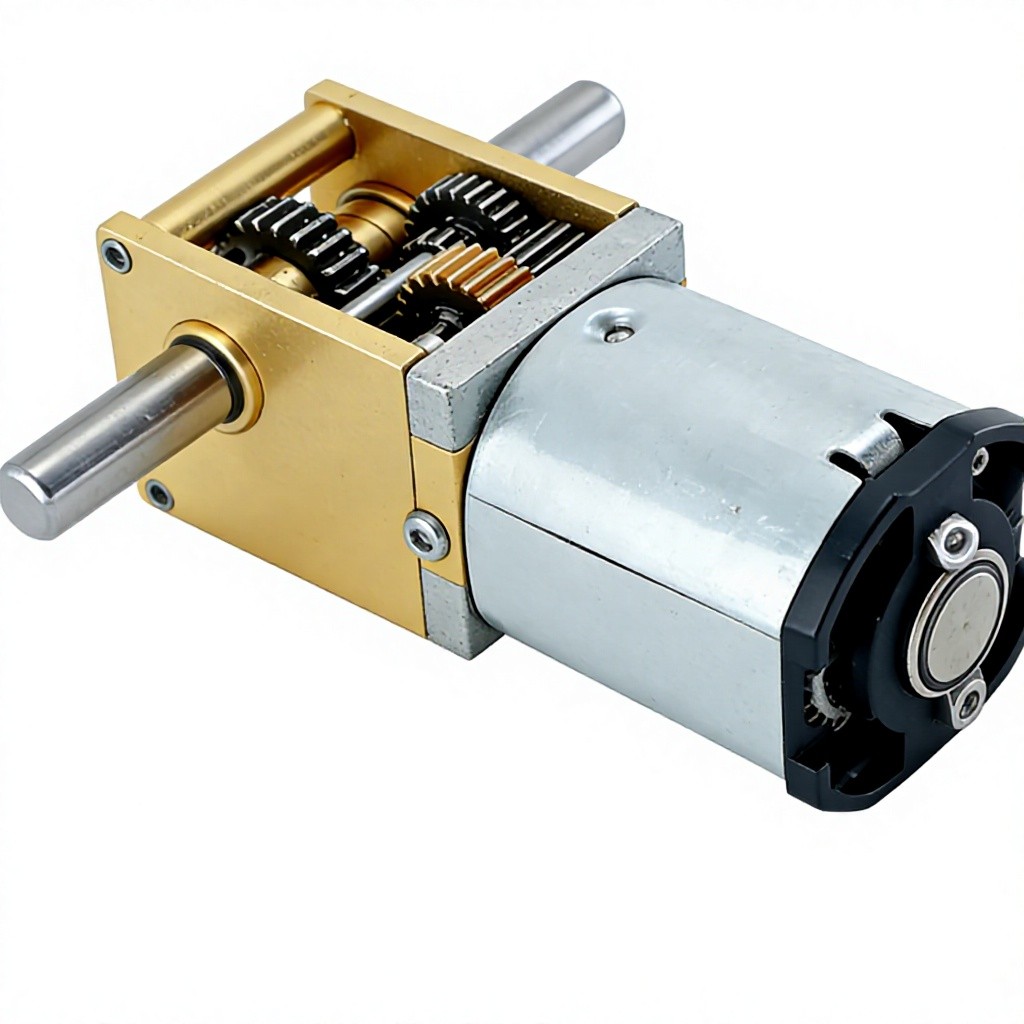
For applications requiring resistance to back-driving, its worm gearbox design is also worth considering. Actual holding performance should be verified under the intended load.
24V: Industrial Equipment and Centralized Power Systems
A 24V power architecture can be useful in automation equipment where several motors and electrical components share a DC supply.
Lower current at comparable power can help reduce voltage drop across longer cables. This is particularly relevant when motor placement is separated from the control cabinet.
El 28P-385 Motorreductor planetario de corriente continua de 28 mm is another option to consider for compact mechanical drive systems.
When evaluating this type of planetary gear motor, pay attention to the rated voltage, gear ratio, output speed, torque and mounting dimensions. These specifications should be confirmed against the selected motor configuration before installation.
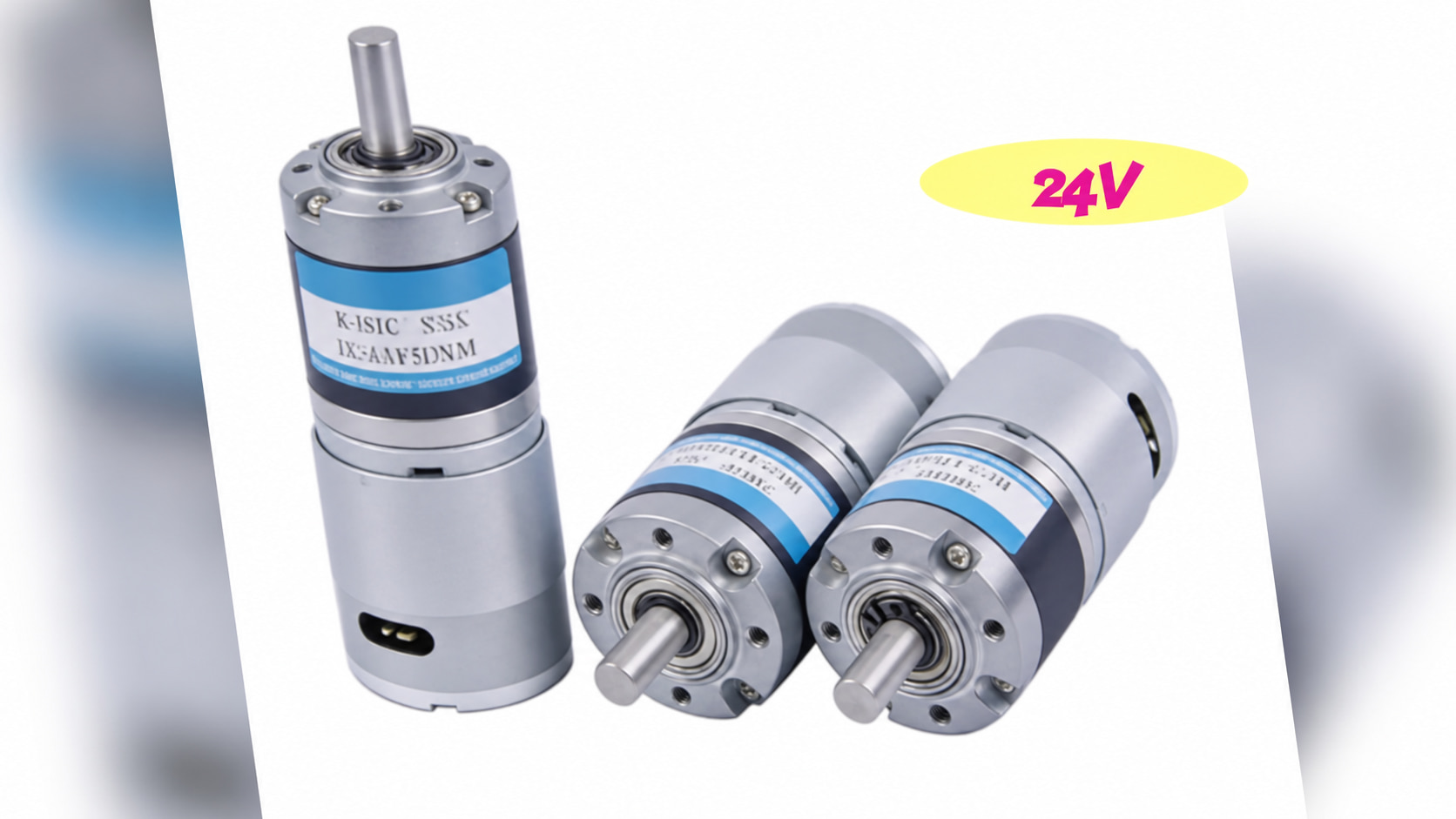
For other gearbox sizes and configurations, explore the planetary gear motor range.
What to Check Before Selecting a DC Gear Motor
A motor can have the correct voltage and still be unsuitable for the application. The following specifications deserve attention before confirming a model.
Electrical requirements
- Rated voltage
- No-load and rated current
- Starting and stall current
- Driver capacity
Mechanical performance
- Output speed
- Continuous torque
- Gear ratio
- Shaft dimensions
Operating conditions
- Duty cycle
- Starting frequency
- Ambient temperature
- Vibration and moisture
Installation details
- Mounting holes
- Connector type
- Longitud del cable
- Rotation direction
One detail often overlooked is starting current. A motor may operate normally once running but draw substantially more current during startup or when accelerating a heavy load.
The controller, wiring and power supply must accommodate this condition.
How to Make the Right Gear Motor Selection
For an OEM project, start with the equipment’s available power supply and required mechanical output. Then compare motor configurations using actual operating data.
If a machine already has a 12V battery system, choosing a compatible 12V motor can avoid unnecessary voltage conversion. If a 24V bus is already available, a 24V configuration may simplify electrical integration.
Test Before Finalizing the Configuration
Prototype testing can help identify differences in current consumption, output speed, temperature rise and mechanical fit.
Before moving into volume production, confirm the approved motor configuration, shaft dimensions, connector details and operating limits. Small specification changes can affect the compatibility of the complete assembly.
The most suitable gear motor is not necessarily the one with the highest voltage. It is the one that delivers the required output while remaining compatible with the machine’s electrical and mechanical design.
Preguntas frecuentes
Is a 24V DC gear motor more powerful than a 12V motor?
Not necessarily. Output power and torque depend on motor design, current, efficiency and gearbox configuration.
Does a 24V gear motor consume less current?
For comparable electrical input power, a 24V system draws approximately half the current of a 12V system. Actual current varies with load and efficiency.
Can I run a 12V gear motor with a 24V power supply?
Not unless the motor is specifically rated for that operating voltage. Excessive voltage can cause overspeed, overheating and premature failure.
Which voltage is better for battery-powered equipment?
Choose the voltage that matches the battery architecture and required performance. Both 12V and 24V systems can be suitable.
What specifications should I provide when ordering a DC gear motor?
Provide rated voltage, output speed, required torque, duty cycle, gearbox dimensions, shaft configuration and wiring requirements.