Planetary Gear Motor Size Guide: Compare 16mm, 22mm and 28mm
This planetary gear motor size guide helps engineers compare 16mm, 22mm and 28mm planetary gear motor configurations based on installation space and mechanical requirements. It covers gearbox dimensions, output speed, reduction ratios and application suitability. The right choice depends on more than diameter: motor characteristics, load conditions and mounting requirements also matter.
A 16mm unit may suit compact mechanisms, while a 22mm configuration provides another option for intermediate installation requirements. A 28mm model offers a larger gearbox envelope for applications that need a different combination of motor and transmission characteristics.
1. Planetary Gear Motor Size Guide: Understanding Dimensions
Planetary gear motor dimensions describe the physical size of the motor and gearbox assembly. The nominal 16mm, 22mm and 28mm designations generally refer to gearbox outer diameter, not the complete motor length.
A planetary gearbox uses a sun gear, multiple planet gears and an internal ring gear to transmit torque and reduce rotational speed.
Before selecting a motor, check these dimensions:
| Dimension | Selection Consideration |
|---|---|
| Gearbox outer diameter | Available radial installation space |
| Overall length | Axial mounting clearance |
| Output shaft diameter | Coupling compatibility |
| Shaft length | Connection and engagement depth |
| Mounting dimensions | Mechanical integration |
| Connector position | Wiring and assembly clearance |
Two motors with identical gearbox diameters may have different overall lengths and shaft configurations.
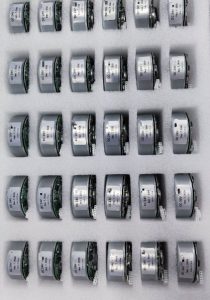
2. 16mm vs 28mm Gear Motor: Key Differences
The main distinction between these configurations is their gearbox diameter and available motor specifications. The following comparison uses published WYOO product information. When using a planetary gear motor size guide, compare the complete assembly rather than relying on nominal diameter alone.
| Parameter | 16P-1636 | 22P-2230 | 28P-385 |
|---|---|---|---|
| Gearbox diameter | 16 mm | 22 mm | 28 mm |
| Motor type | BLDC / Brushed / Coreless | BLDC / Brushed / Coreless | 385 DC micro motor |
| Operating voltage | 3–24V DC | 6–24V DC | 6–24V DC |
| No-load speed | 15–1,500 RPM | 10–500 RPM | 10–1,200 RPM |
| Gear ratio | Confirm configuration | 3:1–80:1 | Confirm configuration |
Speed and voltage specifications are model-specific. No-load speed is not the same as rated operating speed.
16mm Planetary Gear Motor
The 16mm configuration is suitable for evaluating applications with restricted radial installation space.
The WYOO 16P-1636 features a 16mm gearbox and a 1636 motor core. Its published operating voltage range is 3–24V DC, with a customizable no-load speed range of 15–1,500 RPM.
Potential applications include compact robotics, medical equipment, automotive electric drive systems and precision positioning mechanisms.
Its gear ratios, shaft dimensions and wire leads can be customized according to project requirements.
View the 16P-1636 16mm Planetary DC Gear Motor
22mm Planetary Gear Motor
A 22mm gearbox provides an intermediate physical size between the 16mm and 28mm configurations.
The WYOO 22P-2230 supports 6–24V DC operation and offers a published gear ratio range of 3:1–80:1. Its customizable no-load speed range is 10–500 RPM.
This model is worth considering for compact automation, robotic mechanisms, AGV/AMR equipment and precision handling systems.
The final selection should consider the available mounting space, required output speed and permissible gearbox loading.
View the 22P-2230 22mm Planetary DC Gear Motor
28mm Planetary Gear Motor
The 28mm configuration provides a larger gearbox diameter and uses a 385 DC motor core.
WYOO’s 28P-385 supports 6–24V DC operation, with a published no-load speed range of 10–1,200 RPM. Its gear ratios, shaft dimensions, wiring and encoder options can be customized.
The product specification also describes an all-metal powder metallurgy gear construction and a multi-gear load distribution design.
These characteristics make it worth evaluating for automation equipment, robotic actuators and packaging machinery.
View the 28P-385 28mm Planetary DC Gear Motor
3. How to Choose Between 16mm, 22mm and 28mm
The best motor size depends on the mechanical requirements of the complete application. This planetary gear motor size guide uses installation space, output torque, speed and operating conditions as the main selection criteria.
Consider the following selection factors:
Installation space: Measure the available diameter and overall length. Include mounting clearance, shaft extension and connector space.
Output torque: Determine the continuous and peak torque requirements. A larger gearbox does not automatically guarantee higher permissible output torque.
Operating speed: Establish the required output RPM before selecting a reduction ratio.
Operating cycle: Consider running time, starting frequency, acceleration, braking and load variations.
Shaft configuration: Check shaft diameter, length, shape and coupling requirements.
Thermal conditions: Evaluate motor temperature during continuous operation and repeated start-stop cycles.
A preliminary output torque relationship is:
Output Torque ≈ Motor Torque × Reduction Ratio × Gearbox Efficiency
Actual output torque must remain within the motor and gearbox ratings.
For further guidance on gearhead selection, shaft loading and operating conditions, consult FAULHABER’s precision gearheads technical information. Its guidance reinforces the need to assess the complete motor-gearhead combination under the intended application conditions.
Do not use stall torque as a continuous operating value. External radial and axial loads should also be checked against the gearbox specifications.
4. Which Applications Suit Different Gear Motor Sizes?
Different applications place different demands on a planetary gearbox.
| Toepassing | Initial Size to Evaluate | Important Consideration |
|---|---|---|
| Compact positioning equipment | 16 mm | Installation space and positioning |
| Small robotic mechanisms | 16mm / 22mm | Torque and movement accuracy |
| AGV/AMR equipment | 22mm / 28mm | Acceleration and load conditions |
| Automated handling systems | 22mm / 28mm | Continuous operation |
| Packaging machinery | 22mm / 28mm | Repeated start-stop cycles |
| Compact medical equipment | 16mm / 22mm | Noise and mechanical integration |
These are starting points rather than fixed engineering recommendations.
For example, an AGV drive may experience frequent acceleration and changing loads. Its motor selection should account for peak torque and thermal performance, not just nominal speed.
Medical equipment may prioritize compact dimensions, low noise and repeatable movement.

5. WYOO Planetary Gear Motor Options
WYOO provides several planetary gear motor configurations for different mechanical and electrical requirements.
The planetary gear motor product range includes 16mm, 22mm, 24mm, 28mm, 32mm and 36mm options.
For OEM applications, available customization options include:
- Gear reduction ratios
- Output shaft dimensions and geometry
- Operating voltage configurations
- Wire leads and connections
- Encoder feedback options
The manufacturer also lists CNC machining, automated assembly and inspection capabilities, including noise, torque and lifecycle testing.
For an application requiring a non-standard configuration, provide the mechanical drawing, required output speed, torque and operating conditions for engineering evaluation.
6. Technical Questions Before Final Selection
Before approving a motor for production, confirm that its dimensional drawing matches the equipment design.
A useful technical checklist includes:
- Gearbox diameter and overall assembly length
- Rated operating voltage
- Required output speed and torque
- Available reduction ratios
- Continuous and peak loading conditions
- Shaft and mounting dimensions
- Encoder and feedback requirements
- Operating temperature and duty cycle
Where possible, test a representative sample under actual working conditions. This helps identify noise, temperature, vibration and mechanical compatibility issues before volume production.
Conclusion
Selecting between 16mm, 22mm and 28mm planetary gear motors requires balancing installation dimensions with electrical and mechanical performance.
The 16mm option is worth evaluating for compact mechanisms, the 22mm model provides an intermediate configuration, and the 28mm model offers a larger gearbox envelope.
Compare the complete technical specifications rather than choosing by diameter alone. This approach helps reduce integration problems and supports more reliable motor selection.
Veelgestelde vragen
What does 16mm mean in a planetary gear motor?
It generally refers to the nominal outer diameter of the planetary gearbox, not the complete motor assembly.
What is the difference between a 16mm and 28mm planetary gear motor?
The primary difference is gearbox diameter. Motor core, reduction ratio, output speed and permissible torque also vary by model and configuration.
Is a 22mm planetary gear motor a good middle option?
It can be a suitable intermediate option when a 16mm gearbox does not meet the initial mechanical requirements and a 28mm assembly is not necessary. Actual suitability depends on verified performance specifications.
Does a larger planetary gearbox always provide higher torque?
No. Output torque depends on motor torque, reduction ratio, gearbox efficiency and mechanical ratings. Diameter alone cannot establish torque capacity.
How do I calculate the required gear ratio?
Divide the motor speed by the required output speed to estimate the reduction ratio. Then verify the available gearbox ratios and expected loaded performance.
What information is needed when selecting a planetary gear motor?
Provide the available installation space, required voltage, output speed, torque, shaft dimensions, operating cycle and any encoder requirements. A mechanical drawing can help confirm compatibility.