Micro Worm Gear Motor Specifications: RFQ Checklist
Micro worm gear motor specifications determine whether a compact drive assembly can meet an application’s electrical, mechanical and operating requirements. For OEM buyers, checking voltage and output speed alone is not enough. Gear ratio, rated torque, shaft geometry, mounting orientation and operating duty must also match the equipment design.
A micro worm gear motor combines a small DC motor with a worm-and-wheel transmission. Its right-angle output arrangement can simplify installation in compact equipment where a conventional inline motor would require additional space. Before requesting quotations, buyers should establish which specifications are fixed and which can be customized.
What Micro Worm Gear Motor Specifications Should Buyers Check?
A complete specification sheet should describe both the motor and its gearbox. The following parameters provide a practical starting point for technical evaluation.
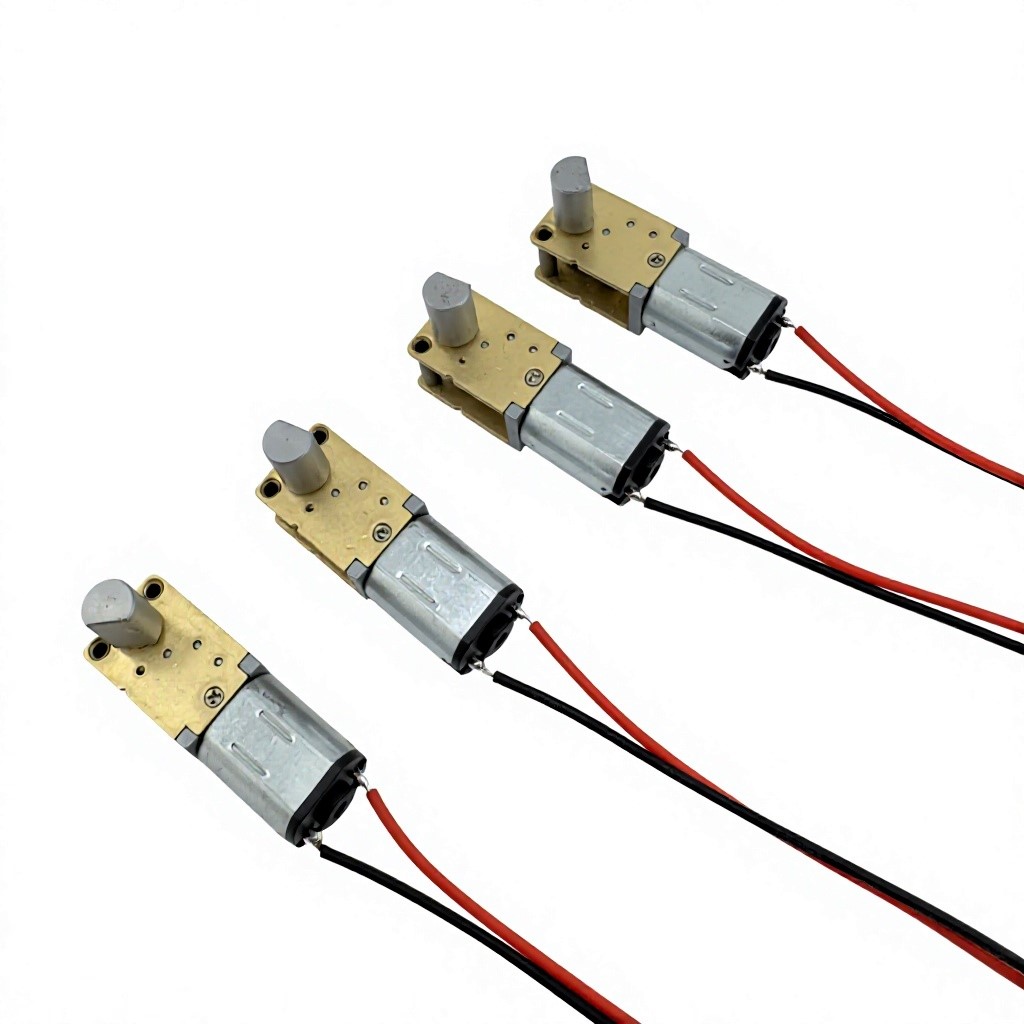
| Caractéristiques techniques | What Buyers Should Confirm |
|---|---|
| Motor type | Brushed DC or brushless DC |
| Rated voltage | 3V, 6V, 12V or other required input |
| No-load speed | Output RPM without external load |
| Rated speed | Output RPM under specified operating conditions |
| Couple nominal | Continuous operating torque under defined conditions |
| Gear ratio | Reduction ratio of the worm transmission |
| Rated current | Current consumption at the specified operating point |
| Output shaft | Diameter, length, shape and orientation |
| Mounting interface | Hole positions, dimensions and fixing method |
| Duty cycle | Continuous or intermittent operation |
| Feedback | Encoder or other position feedback requirements |
These micro worm gear motor specifications should be evaluated together. A higher reduction ratio may lower output speed, but it cannot guarantee sufficient continuous output torque.
Voltage, Speed and Torque Must Be Matched
Voltage is one of the micro worm gear motor specifications that buyers should verify against the intended power supply. Common miniature DC configurations include 3V, 6V and 12V, depending on the motor design.
No-load speed describes output rotation without an external mechanical load. It should not be treated as the actual operating speed of an installed machine.
Rated speed and rated torque are more useful for application evaluation. Buyers should request performance data at the intended voltage and gear ratio rather than relying on a maximum speed figure.
Current consumption also matters. The power supply and motor driver must support the expected operating current and starting demand.
How Do Gear Ratio and Self-Locking Affect Motor Selection?
A worm gearbox transfers motion through a worm and a mating worm wheel. Their engagement changes the direction of the output shaft, commonly producing a 90-degree arrangement.
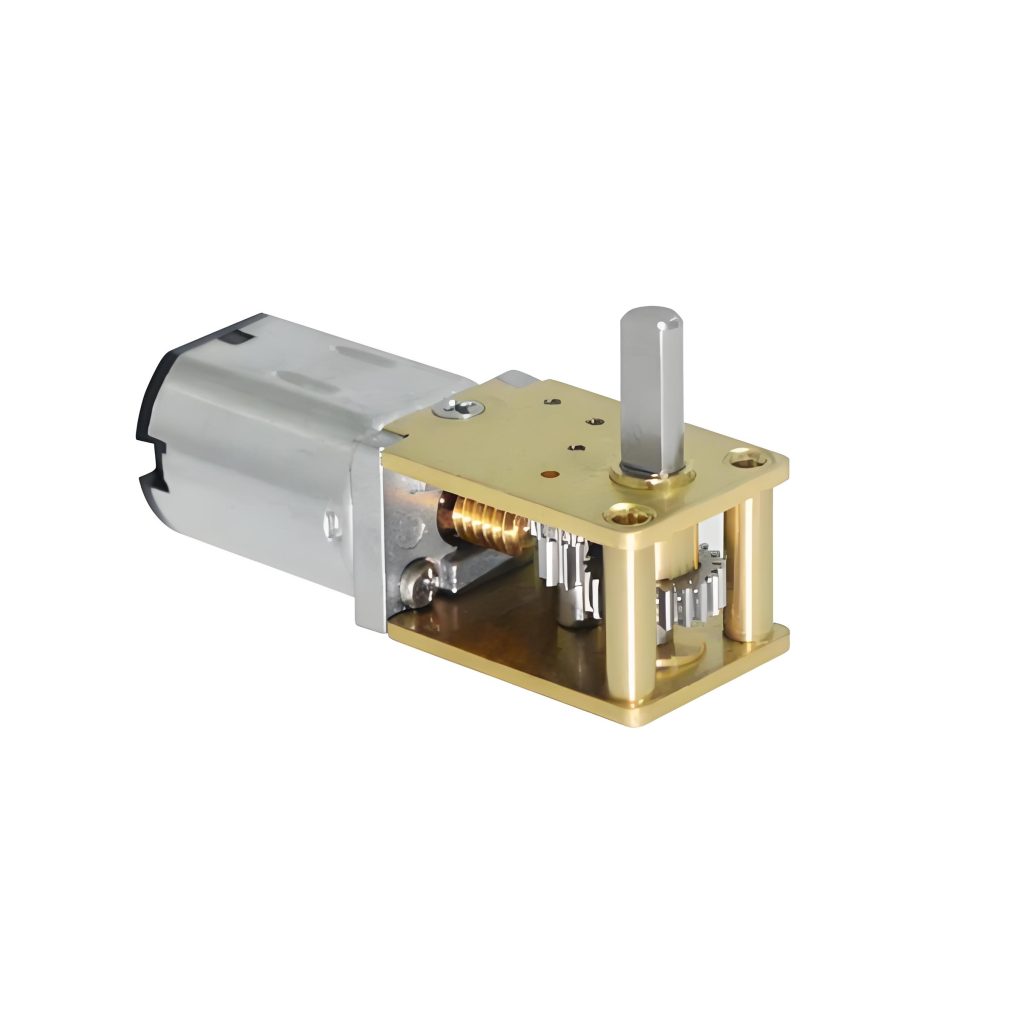
Gear ratio is a key part of micro worm gear motor specifications because it influences output speed and available torque. Higher reduction ratios generally lower output speed, while efficiency and mechanical loading determine usable torque.
A preliminary speed relationship is:
Output Speed ≈ Motor Speed / Gear Ratio
This is a simplified estimate. Actual output speed depends on motor characteristics, transmission efficiency and operating load.
Check Self-Locking Requirements Carefully
Self-locking is an important consideration in some worm gear applications. It describes resistance to reverse motion when external force acts on the output shaft while the motor is unpowered.
However, self-locking is not guaranteed by the worm gearbox design alone. It depends on gear geometry, friction, lubrication, wear and operating conditions.
If the application must hold a suspended load or maintain a safety-critical position, request documented holding performance for the exact configuration. An independent mechanical brake may still be necessary.
For equipment requiring repeatable positioning, also evaluate output backlash, shaft movement and any feedback system.
Which Applications Require Different Worm Motor Specifications?
Micro worm gear motor specifications should reflect the mechanical load, movement pattern and available installation space. One motor configuration cannot automatically serve every application.
| Demande | Important Specifications | Selection Priority |
|---|---|---|
| Compact robotic mechanisms | Torque, shaft orientation, voltage | Space and controlled movement |
| Medical equipment | Noise, speed, operating stability | Smooth operation |
| Automotive mechanisms | Duty cycle, temperature, vibration | Operating reliability |
| AGV/AMR equipment | Torque, current, output speed | Repeated movement and load |
| Packaging machinery | Speed, gear ratio, service life | Repeated operating cycles |
| Precision positioning devices | Backlash, shaft accuracy, feedback | Positioning consistency |
For example, an automotive adjustment mechanism may operate intermittently but experience changing mechanical resistance. A packaging machine may require frequent starts and stops over extended production periods.
These differences affect motor temperature, gearbox wear and expected service life. A suitable selection should therefore reflect the actual operating cycle rather than the application name alone.
Micro Worm Gear Motor Specifications: OEM RFQ Checklist
Before starting a micro worm gearmotor RFQ, prepare a specification package using the micro worm gear motor specifications that matter for the intended assembly.
The following checklist can reduce repeated technical clarification.
1. Electrical requirements
- Required DC voltage
- Rated and starting current requirements
- Motor type
- Available power supply
- Speed control method
- Wiring and connector specifications
2. Gearbox performance
- Required output speed
- Continuous and peak output torque
- Preferred gear ratio
- Direction of rotation
- Self-locking or backdriving requirements
- Acceptable noise and backlash
3. Mechanical interface
- Overall motor dimensions
- Gearbox dimensions
- Output shaft diameter and length
- D-shaft, threaded shaft or custom shaft
- Output shaft orientation
- Mounting hole positions and tolerances
4. Operating environment
- Ambient temperature
- Continuous or intermittent duty
- Starting frequency
- Expected service life
- Vibration and mechanical shock
- Dust or moisture exposure
5. Production and quality requirements
- Prototype quantity
- Estimated production volume
- Required customization
- Inspection documentation
- Packaging requirements
- Applicable regulatory documentation
A dimensioned drawing is particularly useful when replacing an existing motor. Include the mating component, installation space and shaft connection whenever possible.
What Can Be Customized for an OEM Worm Motor Project?
Customization usually involves more than changing the output shaft.
Depending on the motor platform, manufacturers may offer different reduction ratios, shaft geometries, wire lengths, connectors, mounting arrangements and encoder configurations.
Changes to the motor core or gearbox structure may also affect dimensions, electrical performance and production validation. A revised drawing and sample approval should therefore precede mass production.
WYOO Micro Worm Gear Motor: Product and Manufacturing Evaluation
WYOO’s 12Z-N20-2 Micro-moteur à engrenage à vis sans fin 12 V provides a reference configuration for compact right-angle drive applications.
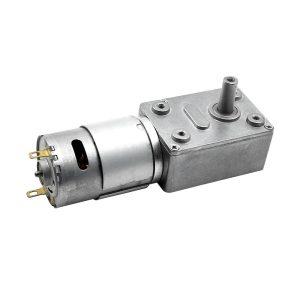
Its published product specifications include:
| Parameter | Published Specification |
|---|---|
| Motor type | Brushed DC motor |
| Gearbox type | Right-angle worm gearbox |
| Voltage options | 3V / 6V / 12V DC |
| No-load speed | 10–600 RPM |
| Rated torque range | 0.1–2.5 kg.cm |
| Gear construction | All-metal alloy gear components |
| Output arrangement | 90-degree right-angle output |
The product page also identifies customizable gear ratios, D-shafts, threaded shafts, wire lengths and connector configurations.
Its listed applications include robotics, medical equipment, automotive electric drive systems, AGV/AMR equipment and industrial automation.
For OEM buyers, WYOO also publishes information about CNC machining, automated assembly and inspection processes. Its stated manufacturing capabilities include noise, torque and lifecycle testing.
The broader WYOO Worm Gear Motor Series includes additional configurations for different mechanical requirements.
When evaluating this product, compare its micro worm gear motor specifications with the dimensional drawing, rated operating point, current data and applicable test results. The published ranges should not be assumed to apply simultaneously to every customized configuration.
FAQ
What should a micro worm gear motor specification sheet include?
It should include motor type, rated voltage, no-load and rated speed, rated torque, gear ratio, current, output shaft dimensions, mounting details and duty cycle.
Is a higher gear ratio always better?
No. A higher ratio generally reduces output speed, but efficiency, torque limits and operating temperature must also be considered.
Can a micro worm gear motor prevent backdriving?
Some configurations provide self-locking behavior, but this depends on gearbox geometry and operating conditions. Confirm holding performance before using the motor in a load-holding application.
What information should I provide for a micro worm gearmotor RFQ?
Provide the required voltage, output speed, torque, gear ratio, shaft drawing, installation dimensions, operating cycle and estimated quantity. Existing motor samples or mechanical drawings can help clarify requirements.
Can the output shaft be customized?
Depending on the motor platform, customization may include D-shafts, threaded shafts, different shaft lengths and other mechanical interfaces. Confirm dimensional feasibility with the manufacturer.
What tests should buyers request before mass production?
Relevant checks may include output speed, torque, current consumption, noise, temperature rise and lifecycle performance. The test conditions should reflect the intended operating application.
Reference Sources
- WYOO – 12Z-N20-2 12V Micro Worm Gear Motor
- WYOO – Worm Gear Motors
- Bodine Electric – Gearmotor Handbook – Worm gearing, efficiency, backdriving and operating considerations.
- FAULHABER – Technical Documentation – Precision motor and gearhead selection considerations.